Affiliate Disclosure: This post may contain affiliate links. If you click and make a purchase, we may earn a small commission at no extra cost to you. Read more at our Affiliate Disclosure page.
If you have ever walked into an H&M store, spotted a linen blazer or a perfectly cut pair of trousers at a price that made you immediately check the tag twice, and walked out with a bag full of things you hadn’t planned to buy, you already understand most of what makes the brand work.
What you might not fully understand is why ordering those same items online so often leads to a completely different experience: slow dispatch, uncertain delivery windows, a chatbot that loops you in circles, and a returns process that quietly charges you £2.99 or $5.99 depending on where you live.
H&M is a brand that many shoppers feel genuinely conflicted about, and that conflict is worth examining honestly before you fill a cart.
What H&M Actually Is
H&M, short for Hennes and Mauritz, is a Swedish fashion retailer founded in 1947 by Erling Persson in Västerås, Sweden. It is the second largest global clothing retailer by revenue, operating more than 4,500 stores across 75 markets and running e-commerce in over 60 countries. H&M Group, the parent company, also operates several other brands: COS, ARKET, and Other Stories, Monki, and Weekday. These sister brands sit at higher price points and different aesthetic positions, but all share the same corporate infrastructure.
H&M’s positioning is affordable fashion, not budget fashion and not luxury fashion. The brand deliberately occupies the middle space: trend-responsive collections at prices that make regular purchasing realistic for most working adults. A blazer at £30, a linen shirt at £18, a structured coat at £55. The prices are not rock-bottom, but they are not positioned to compete with Primark or supermarket clothing ranges either. The pitch is value at a fashionable price, and on many individual items, the brand delivers that.
It is also a fast-fashion company, which has implications for production volume, garment durability, and environmental footprint. H&M has made genuine investments in more sustainable practices: the Conscious Collection uses organic cotton, recycled polyester, and Tencel; stores have garment recycling bins that earn members loyalty points; the H&M Foundation funds textile recycling technology. These are real initiatives. They are also happening alongside the fundamental business model of producing enormous quantities of trend-led clothing at speed, which means the sustainability picture is genuinely complicated rather than either straightforwardly good or cynically green-washed.
What They Offer
Women’s Clothing is the largest and most regularly updated category. The range spans dresses, tops, jeans, trousers, knitwear, outerwear, basics, swimwear, loungewear, lingerie, and activewear. Within women’s, H&M runs several distinct lines. The core collection is the standard affordable range. H&M Studio is a more elevated, fashion-forward capsule released seasonally at slightly higher prices. Premium Selection uses materials like cashmere, silk, and leather at mid-range price points, targeting buyers who want natural fabrics without the price tags of specialist retailers. The Conscious Collection highlights items made with more sustainable materials.
Men’s Clothing covers a similar breadth: T-shirts, shirts, suits and blazers, jeans, knitwear, outerwear, and activewear. The men’s Premium Selection includes cashmere jumpers, linen suits, and leather accessories. Men’s sizing tends to be more consistent than women’s, and the basics range (plain tees, Oxford shirts, chinos) represents some of the brand’s strongest value-for-money products.
Kids’ Clothing covers newborn through age 14, with separate boys and girls categories and a general unisex range. Multi-packs for basics are a frequent strong seller: four pairs of school socks, five bodysuits, or two-pack plain tees represent genuine savings over buying individually. Character and licensed collaborations appear regularly in the kids’ range.
H&M Home offers homeware, soft furnishings, decorative objects, and bedding at accessible prices. This line has grown substantially and now includes furniture in select markets.
H&M Beauty covers makeup, skincare, haircare, and fragrance. The quality varies considerably but entry-level products like nail polishes and tinted lip balms carry strongly positive user reviews relative to their price points.
Activewear runs under the SoftMove and SculptMove sub-lines for women, and a functional sportswear range for men. Performance claims are modest compared to dedicated athletic brands, but as affordable gym and athleisure wear it is a practical option.
Collaborations and Seasonal Collections are a genuine H&M strength with a long history. Karl Lagerfeld in 2004, Stella McCartney in 2006, Roberto Cavalli in 2007, Balmain, Versace, and dozens of others over the decades. These tend to sell out fast in popular sizes. The brand also runs seasonal edits and occasion-specific collections that give the range variety beyond the standard basics.
H&M Membership is the free loyalty programme. Two tiers: Core (free, no minimum spend) and Plus (reached by earning 500 points). Core members get free shipping above a spend threshold, exclusive member pricing on selected items, partner promotions, early access to sale events, and Klarna buy-now-pay-later integration. Plus members add early access to new drops and exclusive sales before they open to the public, plus special offers and premium giveaways. Points are earned per pound or dollar spent in store and online. The programme also rewards garment recycling in store with bonus points. Membership points and status are country-specific and do not transfer between markets.
Shop H&M’s Current Collection
Strong basics, a Premium Selection worth knowing about, and end-of-season sales that regularly hit 30 to 60% off. Join membership before you buy and free shipping kicks in from your first qualifying order.
The Honest Review Picture
H&M has over 16,000 reviews on Trustpilot globally, with the picture varying considerably between in-store and online experiences. In-store shopping tends to produce broadly positive reviews: staff are described as helpful, the physical product is accessible before purchase, and returns are free and immediate. Online shopping has accumulated a pattern of consistent complaints that reflects structural issues rather than occasional bad luck.
The honest tension here is between what H&M makes and how H&M ships it. Many shoppers describe genuinely liking the clothes but finding the process of ordering and, if necessary, returning them online to be disproportionately difficult for a brand of this size and maturity.
Advantages
The clothes, particularly in certain categories, represent strong value for the price. Basics are where H&M has always been most reliably good: plain T-shirts, Oxford shirts, linen shirts, simple knitwear, and tailored trousers in neutral colours. These items hold up reasonably well after washing and look better on than budget retailer equivalents. The Premium Selection range represents a genuine step up in material quality within an affordable tier: a cashmere jumper at £79 is not comparable to a heritage knitwear brand at £300, but it is a real cashmere jumper at a price most people can consider.
The breadth of sizing available online, including tall, petite, and plus-size ranges across most categories, is a practical strength. The kids’ multi-pack basics represent some of the best value in school uniform and children’s essentials on the market.
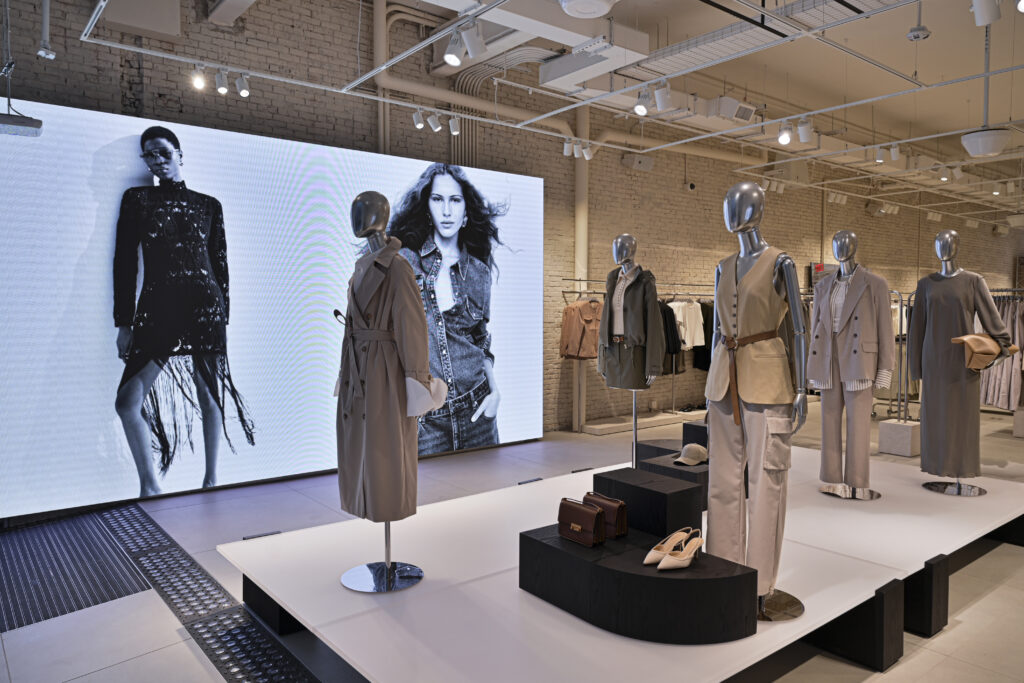
In-store shopping retains a strong appeal. Being able to feel the fabric, assess the cut, and try on before buying removes most of the risk that online purchasing introduces. Store environments have been refreshed across many locations and carry a genuine browsing experience rather than simply a transaction point.
The membership programme, despite removing the birthday discount it once offered, now provides early access to sales and drops that has practical value for buyers who consistently want popular sizes before stock depletes. Plus status is reachable through normal shopping frequency without requiring extraordinary spend.
The sustainability initiatives, while not cancelling the fast-fashion model, are genuinely more substantive than average within the sector. The in-store garment recycling programme collected hundreds of thousands of tonnes of clothing for textile recycling since its launch, and the Conscious Collection provides a reasonable starting point for buyers who want more sustainable materials without switching to specialist slow-fashion brands.
Disadvantages
Online delivery is the most consistent complaint across recent Trustpilot reviews and independent assessments. Dispatch frequently takes four to five working days before the item even leaves the warehouse, and delivery timelines quoted as two to four days regularly extend to eight to fourteen days in practice. The use of Evri as a primary delivery carrier in the UK adds a layer of risk: Evri’s track record for delays, misdelivery, and items marked as delivered without reaching the recipient has been documented across multiple retailers, and H&M customers report this same pattern with frustrating regularity.
Returns charges on online orders are a significant friction point. Non-members in the UK pay £2.99 per return parcel. Non-members in the US pay $5.99. In-store returns remain free regardless of whether the item was purchased online or in store, which creates a practical incentive to travel to a physical location even for returns that originated as online orders. For buyers in areas without a nearby H&M store, this cost is unavoidable unless they reach Plus membership.
Customer service has moved to an AI-first model for online queries. The chatbot resolves simple enquiries like tracking and order status, but for more complex issues such as missing items, incorrect deliveries, or disputed refund deductions, multiple reviewers describe going in circles before reaching a human agent. When human agents are reached, resolution times can be slow, and promised callbacks or follow-ups have not always materialised.
Sizing is inconsistent between categories and sometimes within the same category across different styles. Jeans in particular are flagged repeatedly for running a full size smaller than labelled. The waist measurement on a labelled UK size 14 jean measuring closer to a size 12 in practice appears in more than one recent review. Buying online without being able to try on first amplifies this risk considerably.
Quality inconsistency exists even within the same price tier. Some items perform well through repeated washing with minimal shrinkage and good colour retention. Others, particularly fast-fashion trend pieces in synthetic fabrics, pill quickly, lose shape, or degrade noticeably after a handful of washes. The category you buy from and the specific fabric composition predict quality more reliably than the price alone.
The return and refund process for online purchases can be slow. Received returns have taken two to three weeks to process in some accounts, and refunds do not consistently hit accounts within the stated seven business day window. Several reviewers report having to contact customer service multiple times before a refund appeared.
Who H&M Is Actually Good For
Shoppers who live within easy reach of a physical store and can buy in person, try before committing, and return to the store if needed. This removes most of the friction that defines the online experience, and the in-store product is largely as good as it looks.
Buyers building or refreshing a wardrobe of basics: plain T-shirts, underwear and socks, workwear staples, knitwear in neutral colours, and simple outerwear. These categories have the most reliable quality-to-price ratio in the H&M range.
Families shopping for children’s clothing, particularly through multi-packs and basics. The value on children’s essentials is genuine, kids grow out of clothes fast enough that longevity matters less than price per wear, and the in-store return option is easy.
Shoppers building toward Plus membership who buy H&M regularly enough to reach 500 points, at which point the early sale access becomes a meaningful advantage for popular sizes in trend pieces.
Budget-conscious buyers who want to look at the Premium Selection for natural-fibre investment pieces at prices below specialist retailers. A linen suit at £90, a leather belt at £35, or a cashmere jumper at £79 will not have the provenance or longevity of a heritage brand, but they are real materials at real prices.
H&M is probably not the best option for buyers who rely entirely on online shopping and live far from a store, particularly for anything that requires a precise fit like jeans or structured jackets. The delivery and returns friction is substantial enough to make the experience more frustrating than it needs to be. Buyers who have had prior issues with Evri deliveries should factor the delivery carrier risk into any time-sensitive online order.
How the Product Tiers Actually Differ
Standard Core Collection: the main H&M range. Fast-fashion production timescales, trend-led design, accessible price points. Quality varies by item: cotton basics fare better than polyester-heavy trend pieces. This is where most people’s H&M wardrobes come from and where the brand’s value proposition is most visible.
Conscious Collection: items made with at least 50% more sustainable materials, including organic cotton, recycled polyester, Tencel lyocell, or sustainably sourced viscose. Prices sit within the same general range as the standard collection. The cut and design can be slightly more considered. This is the starting point for buyers who want to make their H&M purchases incrementally more sustainable without paying a premium.
H&M Studio: a higher-end seasonal capsule with more elevated design language. Fewer pieces, more deliberate styling, slightly higher prices. Released twice a year and tends to sell through quickly in popular sizes.
Premium Selection: natural fabrics including cashmere, silk, linen, and leather. The entry point for buyers who want to spend a little more at H&M in exchange for materially better quality. Not equivalent to a dedicated premium brand, but substantially above the core collection in fabric feel and likely longevity. A useful tier for building a capsule wardrobe with pieces that will outlast a single season.
H&M Activewear (SoftMove and SculptMove): functional-enough for gym use and casual wear. Not a performance competitor to specialist brands like Lululemon or Gymshark, but significantly cheaper and adequate for moderate activity. Good for buyers who want affordable matching sets or gym basics without performance fabric requirements.
How to Save
Join H&M Membership before your first purchase: membership is free, points start accumulating immediately, and Core members get free standard shipping above the spend threshold (around £25 in the UK, $50 in the US), which eliminates one of the most common friction points. Do this before you buy, not after.
Return in store rather than by post: in-store returns are free regardless of how the item was purchased. If you have an H&M near you, returning online purchases in store saves the return postage fee and results in a faster refund in most cases.
Shop end-of-season sales: H&M runs significant discounts at season transitions, with markdowns of 30 to 60% on outgoing ranges. The sale section online is worth checking regularly, and Plus members get early access before the general public. Coats in March, swimwear in September, and knitwear in January are predictable sale categories.
Check the sale section in store: reviewers specifically note that in-store sale prices can be lower than online sale prices on identical items. Customer service will not always price-match between channels, so if the difference matters, it is worth checking in store before purchasing online.
Use the garment recycling programme: bringing old clothes to the in-store recycling bins earns bonus points that go toward your membership account, accelerating your path to Plus status. Items from any brand are accepted.
Student discount: 10% off for verified students via StudentBeans. Applied at checkout with verification. Worth doing for any larger purchases.
Avoid buying time-sensitive items online near peak periods: the delivery window extends considerably in the weeks before Christmas, school return periods, and major sale events. If you need something by a specific date, factor in a realistic two-week buffer on online orders or buy in store.
Use the app for app-exclusive offers: H&M periodically runs app-only promotions and exclusive member pricing that does not surface through the website. The app also shows your nearest store’s real-time stock, which is useful before making a trip specifically to return or exchange something.
Get More From Every H&M Purchase
H&M Membership is free to join and starts working immediately. Core members get free standard shipping above the spend threshold, exclusive member pricing on selected items, and early access to sale events before stock depletes in popular sizes. Reaching Plus status unlocks even earlier access to new drops and exclusive promotions. The student discount adds 10% off via StudentBeans, and the in-store garment recycling programme earns bonus points toward your membership tier on any brand of clothing you bring in. For anyone buying regularly, returning in store rather than by post keeps returns free regardless of how the item was purchased. The clothes, particularly the Premium Selection and cotton basics, hold up considerably better when you know which tiers and categories to focus on.
Frequently Asked Questions
Does H&M run small?
In some categories, yes. Jeans are the most frequently flagged category for running small: reviewers with reliable references report that labelled sizes can measure a full size below the stated equivalent. Tops and knitwear are more consistent. The safest approach for any online order in a fitted category is to measure against the H&M size guide on the specific product page rather than going by your usual size from other retailers. If the product page has customer reviews with size mentions, these are worth reading before ordering.
Is H&M quality actually decent?
It depends on the category and the price tier. Cotton basics (plain T-shirts, Oxford shirts, simple hoodies) tend to hold up reasonably well through washing and regular wear. Polyester-heavy trend pieces have a shorter effective lifespan and are more prone to pilling and shape loss. The Premium Selection line, using natural fibres like cashmere and linen, performs above average for the price. The general principle is: the simpler the design and the more natural the fabric, the more reliably the item will last.
How long does H&M delivery actually take?
Officially, standard delivery is quoted as two to four working days. In practice, recent reviews describe dispatch taking four to five days before the order even ships, with total timelines of seven to fourteen days being common for UK online orders. This is substantially longer than the headline figure and should be factored into any purchase with a deadline. If you need something within a week, buying in store is the more reliable option.
Are online returns free at H&M?
For non-members, no. UK online returns cost £2.99 per parcel. US online returns cost $5.99. H&M Membership (the free loyalty programme) does not automatically make returns free: this benefit depends on the specific market and membership tier, so check the returns policy page for your country before purchasing. In-store returns are free in all markets regardless of how the item was originally purchased. Items must be returned within 30 days in their original, unworn condition with tags attached. Sale items have a shorter return window of 14 days in some markets.
Is H&M sustainable?
Partly. The Conscious Collection uses more sustainable materials and the garment recycling programme diverts clothing from landfill. The H&M Foundation funds genuine textile recycling research. These are meaningful steps. At the same time, H&M’s fundamental business model involves producing very high volumes of trend-responsive clothing quickly, which is the definition of fast fashion and carries corresponding environmental costs from water use, transportation, and garment volume. Calling H&M sustainable would not be accurate. Calling it the worst-performing major fashion retailer on sustainability would also not be accurate. It sits somewhere in the middle, making real but insufficient progress relative to the scale of the issue.
What happens if my order arrives wrong or incomplete?
Contact customer service through the app or website with your order number and a description of the issue. Photo evidence of wrong or missing items strengthens your case. The chatbot handles the initial contact and can escalate to a human agent, though this sometimes requires persistence. Refunds for missing or incorrect items are typically processed within seven working days once confirmed, though some reviewers report this taking longer. If you have not received a resolution within two weeks, escalating through your bank’s chargeback process is an option for card payments in most markets.