Affiliate Disclosure: This post may contain affiliate links. If you click and make a purchase, we may earn a small commission at no extra cost to you. Read more at our Affiliate Disclosure page.
If you’ve ever started planning a trip to Koh Samui and noticed that flights to the island cost noticeably more than flights to Phuket or Chiang Mai, you’ve just encountered Bangkok Airways without necessarily knowing it.
The airline that calls itself “Asia’s Boutique Airline” is the only carrier operating into Samui Airport, which it also owns. That single fact shapes a lot of what Bangkok Airways is, what it delivers, and what it charges. Whether that’s a frustrating monopoly or a genuinely distinctive travel experience depends on which route you’re flying and what you’re comparing it to.
For travellers making their way around Thailand or into Southeast Asia more broadly, Bangkok Airways is worth understanding properly before you book.
What Bangkok Airways Actually Is
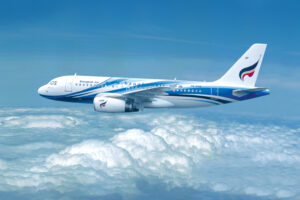
Bangkok Airways is a Thai regional airline founded in 1968, headquartered in Bangkok and operating primarily out of Suvarnabhumi Airport (BKK). It markets itself as “Asia’s Boutique Airline” and uses the IATA code PG.
The airline is neither a budget carrier nor a full international legacy airline. It sits in a deliberately crafted middle position: full-service standards, including meals, checked baggage and lounge access on every ticket, operating primarily short-haul and regional routes across Southeast Asia. Most flights are under three hours. Many are under one.
Its fleet consists of three aircraft types: the Airbus A319, the Airbus A320, and the ATR 72-600 turboprop. The ATRs operate on shorter domestic routes to smaller airports where runway length limits what can land. The A319s and A320s handle busier domestic and regional international routes. Blue Ribbon Club, the airline’s business class product, is only available on select A319 and A320 services.
What makes Bangkok Airways structurally unusual is its airport ownership. The airline owns and operates Samui Airport on Koh Samui, Trat Airport near Koh Chang, and Sukhothai Airport in Sukhothai province. This means that on routes into these destinations, Bangkok Airways is either the only carrier or holds a dominant position with effectively no meaningful competition. It is a full-service airline that, on certain routes, also happens to be a monopoly. That context matters for anyone budgeting a Thai island trip.
In 2025, Bangkok Airways was awarded Skytrax World’s Best Regional Airline, a recognition the airline has held across multiple years. That accolade reflects genuine strengths in service and passenger experience, particularly when measured against competitors operating similar route lengths.
What They Offer
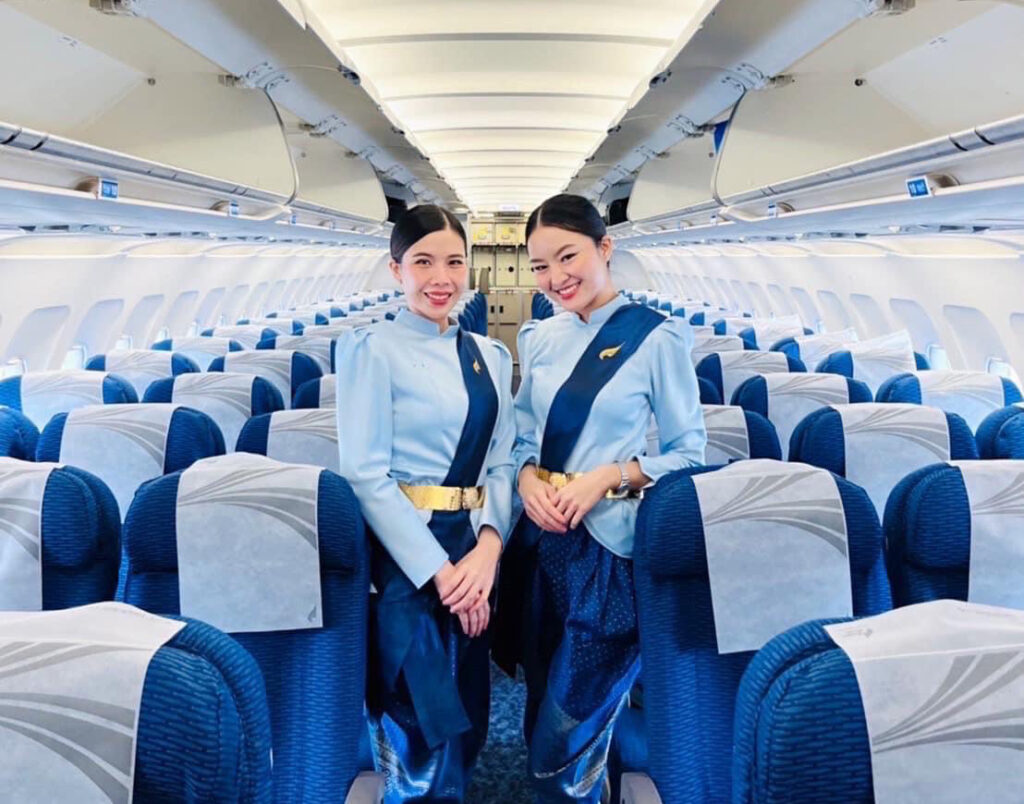
Economy Class is the standard cabin across all Bangkok Airways routes. Seats carry more legroom than most budget carrier economy cabins, with seat pitch broadly comparable to full-service carriers. On Airbus aircraft on certain routes, seatback screens provide access to movies, television and music. On other services, streaming is available via the Bangkok Airways app on personal devices. No power outlets are fitted to seats, so a charged device or portable battery is advisable on longer services.
Every economy ticket includes a 20kg checked baggage allowance and 7kg of carry-on. There are no fees to access this, no tiered fare structures that strip out baggage for cheaper tickets. What you buy is what you get.
In-Flight Meals are served on all Bangkok Airways flights, including those under an hour. Even a 45-minute hop from Bangkok to Sukhothai comes with a meal tray, real cutlery, and a beverage service. More than 20 special meal options can be pre-selected when booking, a variety typically associated with long-haul international carriers. The food quality is consistently rated as well above the regional airline average, with Thai-inspired dishes and genuinely good desserts appearing regularly in passenger reviews.
Boutique Lounge Access is complimentary for all passengers on all Bangkok Airways tickets, regardless of fare class. Not business class passengers. Not elite frequent flyers. Everyone. Passengers holding any Bangkok Airways ticket can access the Boutique Lounge before departure, which offers snacks, hot and cold drinks, WiFi and a comfortable place to wait away from the main terminal. The khao tom mat, a banana sticky rice dessert, has become something of a signature. This blanket lounge access for economy passengers is genuinely rare in regional aviation and represents meaningful added value relative to the ticket price.
Blue Ribbon Club (Business Class) is available on select A319 and A320 routes, including Bangkok to Koh Samui, Bangkok to the Maldives, Bangkok to Phnom Penh, and Koh Samui to Hong Kong and Singapore. The cabin has four rows of 2×2 seating with 47-inch pitch and 22-inch width. The seats recline but are not lie-flat, which matters for anyone assessing this against long-haul business class standards. On these short routes, the product is generous but appropriately scaled for flight durations under two hours. Blue Ribbon Club includes priority check-in, exclusive Blue Ribbon Club Lounge access, an on-demand meal menu with premium beverages including wine and champagne, and a 40kg checked baggage allowance.
Blue Ribbon Club Lounge access, at select airports including Samui, Phuket and Chiang Mai, can be purchased by economy passengers for THB 950 per person, which is considerably less than a typical standalone lounge access fee elsewhere.
Route Network covers more than 20 destinations across Thailand, Cambodia, China, Hong Kong, Laos, the Maldives, India and Singapore. Key domestic routes include Bangkok to Koh Samui, Phuket, Krabi, Chiang Mai, Sukhothai and Trat. Regional international highlights include Bangkok to Siem Reap (Cambodia), Luang Prabang (Laos), Phnom Penh, Maldives, Singapore and Hong Kong. Samui serves as a secondary hub with direct connections to Singapore and Hong Kong, bypassing Bangkok entirely.
FlyerBonus is Bangkok Airways’ loyalty programme. Members earn points on Bangkok Airways flights (calculated per mile flown, with bonuses or adjustments by booking class) and can also accumulate points through partner airlines including Emirates, Qatar Airways, Cathay Pacific and Japan Airlines. Hotel partners include Anantara properties; car rental partners include Avis. Elite tiers (Premier and Premier Plus) unlock Blue Ribbon Club Lounge access, priority check-in and boarding, additional baggage allowance and preferred seat assignment. Bangkok Airways is not a member of any global alliance (SkyTeam, oneworld, or Star Alliance), which limits onward earning and redemption flexibility compared to alliance-affiliated carriers.
The Elite Card is an annual subscription product available to FlyerBonus members that offers unlimited domestic economy travel (or domestic and international for The Elite Plus tier), covering base fares on Bangkok Airways operated routes. It also includes FlyerBonus Premier status, priority handling, and lounge access benefits for the subscription year.
Book Bangkok Airways Flights
Lounge access, a hot meal, and 20kg of checked baggage on every ticket regardless of fare class. Check current fares and promotional deals directly at bangkokair.com.
The Honest Review Picture
Bangkok Airways occupies a position that almost no other regional carrier in Southeast Asia has managed to hold: a genuine full-service product at prices that, on most routes, sit between budget carrier and full legacy airline fares. The Skytrax recognition is not a marketing invention. The lounge access, the meals, the baggage inclusion and the cabin crew training are real differentiators that repeat passengers consistently cite.
The airline’s complications are also real, and they centre almost entirely on the monopoly routes, specifically Koh Samui and to a lesser extent Trat and Sukhothai, where the absence of competition removes the pricing pressure that keeps most airline fares in check.
Advantages
On non-monopoly routes, Bangkok Airways delivers a full-service experience at a price point that is hard to match in the region. The blanket lounge access for economy passengers is the most frequently cited positive across independent travel reviews, from Skytrax to TripAdvisor to frequent flyer blogs. Arriving at a Thai airport and walking into a comfortable, staffed lounge with food and WiFi on an economy ticket costing THB 1,500 is a genuinely different experience from sitting in a crowded departure gate.
The meal quality is above average for the route lengths involved. Getting a hot meal with real cutlery on a 50-minute flight is a rarity in modern aviation, and Bangkok Airways does this consistently. Pre-selecting from over 20 meal types at booking is an unusual level of flexibility for a regional operator.
Cabin crew quality is consistently highlighted in reviews across rating platforms. Thai hospitality as a cultural baseline means the standard of warmth and attentiveness that travellers report reflects something structural rather than coincidental.
The airline’s ownership of Samui, Trat and Sukhothai airports creates, for all its commercial implications, a consistent ground experience at those destinations that third-party airports cannot guarantee. Samui Airport in particular is designed around a resort aesthetic, with an open-air terminal, tram transfers to aircraft, and arrival facilities that feel more like a boutique hotel approach than a functional transport hub.
Codeshare agreements with Singapore Airlines, Qantas and other carriers make Bangkok Airways a practical connector for travellers routing through Bangkok from Europe, Australia or North America, booking through-tickets on a single itinerary.
Disadvantages
The Koh Samui pricing situation is the airline’s most documented criticism and the most legitimate one. Bangkok Airways owns Samui Airport and is effectively the only carrier flying into it at meaningful frequency. Fares from Bangkok to Samui regularly run two to three times the cost of equivalent-distance routes where competition exists. Travellers comparing a Bangkok to Koh Samui ticket against a Bangkok to Phuket or Chiang Mai ticket on the same dates will see a substantial and consistent gap that the boutique service level, however good, does not fully explain. This is not a hidden observation: consumer affairs forums and travel communities document this pricing pattern extensively.
The fleet shows its age on some routes. A319s in service on certain sectors have been in operation for a considerable number of years, and while maintenance standards appear sound, in-cabin wear and older seat designs reflect this. The ATR 72-600 turboprop deployed on routes to Sukhothai, Trat, Mae Hong Son and Lampang is a substantially different aircraft experience from the Airbus fleet: louder, smaller at 70 seats in an all-economy configuration, and more noticeable in turbulence. Passengers with a preference against turboprops should check which aircraft type operates their specific route before booking.
Blue Ribbon Club is a reasonable short-haul business product but should not be assessed against lie-flat international business class. At two to three times economy pricing on flights lasting under two hours, the value case is thin for most travellers unless lounge access or luggage allowance is the primary motivation.
Bangkok Airways is not a member of any global airline alliance. FlyerBonus points cannot be earned or redeemed on Star Alliance, SkyTeam or oneworld services by default. Travellers who build strategies around a single alliance ecosystem will find Bangkok Airways sits outside that structure. Avios-compatible earning through Cathay Pacific and Qatar Airways partnerships exists but requires specific routing and booking class awareness.
Cancellations, when they occur, have generated mixed reviews in terms of handling. Travellers on Chiang Rai routes have documented short-notice cancellations. The customer service response in these cases ranges from efficient to slow, depending on the channel used. The PG Live Chat function receives better reviews than phone queue interactions.
Who Bangkok Airways Is Actually Good For
Travellers planning to visit Koh Samui by air, for whom Bangkok Airways is the only realistic direct option. Understanding the pricing context before booking, rather than discovering it mid-search, is the useful part of any preparation.
Travellers doing multi-destination Thailand itineraries who want a consistent service standard across domestic legs without managing a separate budget carrier bag fee, seat fee and meal fee calculation for every flight. The included baggage and lounge access across all tickets simplifies both the logistics and the total cost comparison.
Travellers connecting from long-haul international flights through Bangkok who want to arrive at a Thai island destination the same day with minimal friction. The codeshare relationships with Singapore Airlines and Qantas enable single-ticket bookings that cover the whole journey.
Visitors to Luang Prabang in Laos or Siem Reap in Cambodia who prefer a full-service carrier for short regional hops rather than a budget operator. Bangkok Airways is one of the few airlines providing direct connections between Bangkok and Luang Prabang, which has no large international airport infrastructure.
Frequent travellers within Thailand who fly the same routes repeatedly and can build FlyerBonus points toward the Premier tier, which unlocks Blue Ribbon Club Lounge access even on economy tickets.
It is probably not the first choice for pure budget travellers with flexible itineraries who can use ferries, trains or AirAsia to reach the same destinations more cheaply. The Bangkok Airways price premium is real, and on routes where alternatives exist, a budget carrier with a paid meal and extra baggage can still undercut the Bangkok Airways fare.
How the Cabin Options Actually Differ
Economy Class on Airbus routes: the standard experience. Meals included, 20kg baggage included, lounge access included. Seatback entertainment on select aircraft, app-based streaming on others. No power outlets. Legroom is above budget carrier standard.
Economy Class on ATR 72-600 routes: the same inclusions but a meaningfully different aircraft. Louder cabin, propeller-driven, 70 seats in a 2+2 configuration, shorter runways and destinations. If you book a Bangkok Airways ticket and the route ends up on an ATR, the service will be the same but the aircraft experience will not be.
Blue Ribbon Club (Business Class) on Airbus routes: 2×2 seating with 47-inch pitch, on-demand meal menu with premium drinks, Blue Ribbon Club Lounge access, priority check-in and boarding, and 40kg baggage. Available only on select A319 and A320 routes. Not lie-flat. Worth it primarily for the lounge product and luggage allowance on routes like Samui to Singapore or Bangkok to the Maldives where total journey time is still manageable.
Blue Ribbon Club Lounge paid upgrade: economy passengers at Samui, Phuket and Chiang Mai airports can pay THB 950 per person to upgrade from the Boutique Lounge to the Blue Ribbon Club Lounge. This is a sensible option if you have a long pre-departure wait and want access to a quieter space with cooked-to-order food and shower facilities.
How to Save
Book directly at bangkokair.com: the airline’s own site typically carries the lowest fares without the markup that aggregators sometimes apply on restricted-capacity routes like Samui. The flight deals section on the homepage lists current promotional fares by destination.
Join FlyerBonus before your first flight: membership is free, points accumulate from the first sector, and even without elite status the programme gives you access to the Points + Cash redemption tool, which lets you reduce cash fares using accumulated points.
Travel in shoulder season: Bangkok Airways fares on Samui routes track closely with island demand. January through March and June through August are peak periods. Travel in May or October and prices on Bangkok to Samui can be meaningfully lower, though weather considerations apply.
Check the flight deals section regularly: promotional fares are published for specific travel windows, with Phuket starting from THB 1,500, Krabi from THB 1,200, Samui from THB 2,500, and Luang Prabang from THB 2,500 at time of writing. These represent the lowest available fares rather than the typical booking-day price.
Use the Blue Ribbon Club Lounge upgrade selectively: at THB 950 per person, the lounge upgrade is worth considering on long pre-departure waits but not necessary on a typical domestic connection. The Boutique Lounge provided to all economy passengers is already substantially better than most regional airport gate areas.
Build toward FlyerBonus Premier status if you fly Bangkok Airways regularly: Premier status, earned through sector and points thresholds, unlocks Blue Ribbon Club Lounge access on economy tickets and priority handling across the network. For frequent Thai island travellers, this is one of the more achievable elite status upgrades in Asian aviation.
Consider The Elite Card if you travel frequently within Thailand: for a fixed annual fee, The Elite offers unlimited domestic travel on economy base fares. If you take more than a handful of domestic Bangkok Airways sectors per year, the maths often works in the card’s favour.
Check Fares and Promotional Deals Before You Book
Bangkok Airways publishes promotional fares regularly on its own site, with Phuket from THB 1,500, Krabi from THB 1,200, Samui from THB 2,500, and Luang Prabang from THB 2,500 at time of writing. Booking direct typically gets you the lowest available fare without the aggregator markup that can appear on restricted-capacity routes. Joining FlyerBonus before your first flight is free, takes two minutes, and means points accumulate from your first sector toward Premier status and Blue Ribbon Club Lounge access. If you travel within Thailand more than a few times a year, The Elite Card’s unlimited domestic travel option is worth calculating against your typical annual spend. The lounge, the meal, and the baggage are already included. The question is just where you want to go.
Frequently Asked Questions
Is Bangkok Airways worth the premium over budget carriers?
On most non-Samui routes, yes, when the full cost comparison is done honestly. Budget carriers in Thailand typically charge separately for checked baggage, seat selection, meals and sometimes carry-on above a low free allowance. A Bangkok Airways ticket with 20kg baggage, lounge access and a meal included compares more favourably to a budget carrier ticket with those ancillaries added than the headline fares suggest. On Samui specifically, Bangkok Airways has limited competition, so the question is less about value and more about whether you want to fly at all.
Why are Bangkok to Koh Samui flights so expensive?
Bangkok Airways owns Samui Airport and is the dominant carrier on that route. Without meaningful competition, pricing is set by demand rather than competitive pressure. Fares are highest during Thai high season and around major holidays. The only alternative for reaching Koh Samui by air involves flying to Surat Thani on the mainland and taking a ferry, which adds two to three hours to the journey but costs significantly less.
Does every Bangkok Airways passenger really get lounge access?
Yes. Boutique Lounge access is included on all Bangkok Airways tickets regardless of fare class. Economy passengers at major Bangkok Airways airports walk into a staffed lounge with food, drinks and WiFi before their flight. Business class passengers and FlyerBonus Premier members use the separate Blue Ribbon Club Lounge.
What aircraft should I expect on my route?
Airbus A319s and A320s operate the busier domestic routes (Bangkok to Samui, Phuket, Chiang Mai, Krabi) and the regional international routes (Singapore, Hong Kong, Maldives, Phnom Penh, Siem Reap). ATR 72-600 turboprops operate shorter domestic routes to Sukhothai, Trat, Mae Hong Son and Lampang. Check the specific aircraft type when booking through the seat map, as the experience differs considerably.
Can I earn frequent flyer miles on Bangkok Airways with another programme?
Bangkok Airways does not belong to a global alliance, but FlyerBonus points can be earned across several partner airlines including Emirates, Qatar Airways, Cathay Pacific, Japan Airlines and Etihad. Avios-eligible earning on Bangkok Airways flights via Cathay Pacific or British Airways is available on certain booking classes. Check the applicable booking class list before purchasing if miles earning is a priority.
Is Bangkok Airways reliable for connections?
Generally yes on trunk routes. Bangkok to Samui, Phuket, Chiang Mai and the major regional internationals operate with solid on-time performance. Smaller domestic routes on ATR aircraft are more vulnerable to weather and operational disruption, and cancellations, when they occur, have been handled inconsistently. If you’re connecting Bangkok Airways to an international long-haul flight, build in a layover that absorbs a two-hour delay without consequence.