Affiliate Disclosure: This post may contain affiliate links. If you click and make a purchase, we may earn a small commission at no extra cost to you. Read more at our Affiliate Disclosure page.
If you’ve ever been quoted £80 for a phone case, a wall bracket, or a set of LED strips at a local retailer and then found what looks like the exact same product on AliExpress for £3.50, you already understand the platform’s basic appeal.
What you might not understand is why it’s that cheap, whether it will actually arrive, whether it will match the photos, and what happens if it doesn’t.
Those questions have real answers. AliExpress is not a scam, but it does require a different approach to shopping than Amazon or any high street retailer. Understanding how the platform works, what its limitations are, and where it genuinely delivers is the difference between getting extraordinary value and a frustrating wait for something you didn’t order.
What AliExpress Actually Is
AliExpress is a global B2C marketplace launched in 2010 and owned by Alibaba Group, the Chinese technology and e-commerce conglomerate. It is not a retailer. AliExpress does not manufacture or stock products. It operates as a platform that connects international buyers directly with sellers, the majority of whom are Chinese manufacturers, wholesalers and traders, though sellers from other countries also participate.
This distinction matters more than most first-time shoppers realise. When you buy on AliExpress, you are buying from an independent seller who uses AliExpress as their storefront. AliExpress itself acts as the middleman: it holds your payment in escrow, provides the transaction infrastructure, hosts reviews, manages the dispute resolution process, and releases funds to the seller only after you confirm receipt or the buyer protection window closes. The platform itself is not your seller.
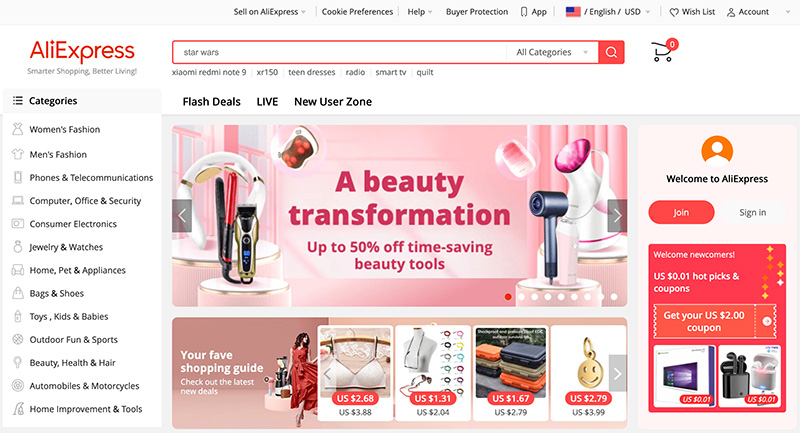
This model is why prices are so dramatically lower than domestic retailers. Products come directly from the source, often from the same factories that supply global brands, without the markup of importers, distributors, wholesalers, or retail margins stacked on top. The trade-off is that no single entity is centrally managing inventory quality, packaging standards, or shipping timelines. That is done by each seller independently, and sellers vary considerably.
As of 2025, AliExpress serves more than 150 million active buyers across 220 countries, receiving around 720 million monthly visits. It is one of the largest e-commerce platforms on the planet by both reach and product volume.
What They Offer
Product categories cover virtually everything a general retailer would carry, and a great deal that domestic retailers would not. Major categories include consumer electronics and accessories, mobile phone parts and peripherals, fashion and clothing, home and garden, beauty and personal care, toys and hobbies, automotive parts, tools and hardware, sports and outdoor equipment, jewellery, craft and sewing supplies, and industrial components. Niche categories like RC components, cosplay materials, scientific equipment, and replacement parts for discontinued devices are where AliExpress has almost no domestic equivalent.
Standard marketplace listings are the traditional AliExpress model. Individual sellers list products with their own pricing, photos, descriptions, shipping options and seller-set policies. Quality, accuracy and reliability vary significantly by seller. This is where both the best deals and the worst experiences live.
AliExpress Choice is the platform’s curated programme, introduced as a direct response to growing competition from faster cross-border platforms. Choice-badged products are sold through AliExpress’s own logistics infrastructure via Cainiao, the Alibaba logistics arm, rather than being dispatched by individual sellers. This changes the experience considerably: Choice items ship from dedicated AliExpress warehouses rather than individual factory stockrooms, arrive within a guaranteed 9 to 15 days in major markets, include free shipping on orders over $10 or when buying three or more items, and offer free returns within 15 days of receipt. AliExpress also applies basic quality vetting to Choice-listed products, which reduces but does not eliminate the inconsistency associated with standard marketplace listings.
Shipping options are where the most important decisions happen before checkout:
- Economy Shipping (Cainiao Super Economy or similar): free or very close to free, 30 to 60 days delivery or longer, limited to no tracking once the parcel leaves China. This is the default for many standard listings. Buyers who choose this route and then open disputes when parcels take 50 days are often in a situation where nothing has technically gone wrong, just slowly.
- AliExpress Standard Shipping: typically $3.99 to $8.99, delivers in 8 to 20 days, includes end-to-end tracking. The most practical choice for standard marketplace purchases where Choice is not available.
- Choice Shipping (via Cainiao Choice network): free on qualifying orders, 9 to 15 days, real-time tracking, handled by AliExpress logistics rather than the individual seller. This is the most reliable shipping method on the platform.
- ePacket: supports full tracking via local postal carriers including Royal Mail, USPS and Canada Post. Typically 7 to 20 days for eligible countries. Better for lighter items from sellers not enrolled in Choice.
- Premium carriers (DHL, FedEx, UPS): 3 to 7 days, expensive relative to product prices, but available for urgent orders. Best reserved for high-value purchases where speed genuinely justifies the cost.
Buyer Protection is AliExpress’s escrow and dispute system. Your payment is not released to the seller when you place an order. It is held by the platform until you confirm receipt, or until the buyer protection period expires (typically 60 days from shipment, with extensions possible in some cases). If your order does not arrive within the protection window, if it arrives damaged, or if it does not match the product listing, you can open a dispute, submit photo or video evidence, and request a full or partial refund. In 2025, AliExpress updated dispute resolution to process cases with clear evidence within 48 hours. For low-value items under $5, auto-approval of refunds without a return requirement was introduced. Never confirm receipt of an order before you are satisfied with it, and never close a dispute early in exchange for a seller’s promise of a separate refund, as closed disputes cannot be reopened.
AliExpress Coins are the platform’s internal rewards currency, earned on purchases and redeemable against future orders. Coins accumulate automatically and can meaningfully reduce costs on repeat purchases when stacked with other promotions.
The AliExpress App frequently carries exclusive discounts unavailable on the desktop site, particularly for new users. First-time app installers can access items priced at $0.01 in the New User Zone, along with automatic welcome coupons of $3 to $5 applied at account creation.
Shop AliExpress with Buyer Protection
Your payment is held in escrow until you confirm receipt. Filter for the Choice badge for faster shipping, guaranteed delivery windows, and free returns on qualifying orders.
The Honest Review Picture
AliExpress has over 155,000 reviews on Trustpilot, with around 80% rated four or five stars. That is a large and meaningful sample. Negative reviews cluster consistently around three issues: delivery delays, tracking that goes dark after leaving China, and disputes with sellers over product quality. Positive reviews cluster around price, product variety, and the Buyer Protection system working as described when things go wrong.
The platform’s own conduct is not the primary variable in most bad experiences. The seller you choose is.
Advantages
The prices are the obvious starting point, but the extent of the savings in certain categories is worth stating directly. Electronic components, phone accessories, tools, craft supplies, LED lighting, automotive trim, hobby parts, and fashion basics routinely cost 70 to 90% less than domestic equivalents. For anyone buying in these categories with patience for standard shipping times, AliExpress represents savings that no domestic retailer can match.
The product breadth is genuinely unmatched in certain niches. Replacement parts for electronics no longer under manufacturer support, obscure hobby components, specific cosplay materials, niche automotive accessories, craft fabrics by the metre: these exist on AliExpress in quantities and at prices that simply are not replicated domestically. For buyers who know what they are looking for and how to evaluate a listing, AliExpress has no real peer.
The Choice programme has materially improved the reliable part of the experience. Choice-badged orders from local warehouses in the US or EU can arrive within three to eight business days with no customs friction, at prices that still undercut domestic options. For eligible products in eligible markets, this is a legitimately competitive e-commerce experience rather than a patience exercise.
Buyer Protection genuinely works when you use it correctly. The escrow model means you are not funding a seller until the transaction is complete to your satisfaction. Dispute win rates for cases backed by photo or video evidence are high. The platform holds a meaningful club over sellers: unresolved disputes affect ratings, and ratings affect visibility.
Disadvantages
Quality inconsistency is the defining challenge of the standard marketplace. Because sellers operate independently, the same product listing from two different sellers can result in vastly different items. Even the same seller can ship inconsistently between orders. Without central quality control, you are partly buying a lottery on individual items, particularly on first orders from an unfamiliar seller.
Counterfeit and misleading products are a persistent risk in specific categories. Branded electronics, designer-adjacent fashion, premium cosmetics, and anything carrying a recognisable global brand name should be approached with significant caution. A listing claiming to sell a product identical to an Apple, Sony, or luxury brand item at a fraction of retail is almost certainly not selling that item. The rule is consistent: AliExpress is excellent for unbranded or own-brand products, and risky for branded goods where authenticity is part of the value.
Shipping times on standard economy listings remain slow, and the platform’s displayed estimates are often based on the fastest available option rather than the realistic delivery timeline for the cheapest shipping method. Many shoppers select free economy shipping without reading the fine print and then discover that 45 to 60 day delivery windows are normal, not exceptional.
Returns on standard marketplace listings can be complicated. Returning a low-value item to China often costs more in shipping than the item itself is worth. The practical resolution for most disputes involving inexpensive goods is a partial refund rather than a return. This means accepting money back and keeping an unsatisfactory item, which works financially but is not a full-service consumer experience.
Customer service through AliExpress’s own channels moved to an AI-first model in 2026. Reaching a human agent for complex disputes now requires persistence. The dispute system itself handles most cases adequately when evidence is submitted correctly, but for edge cases or nuanced situations, resolution can require time and tenacity.
Who AliExpress Is Actually Good For
Buyers who are patient. The word patient appears in every credible AliExpress guide for good reason. If you need something in three days, AliExpress is not the right channel unless you are willing to pay for DHL shipping on a product that already costs a fraction of its domestic equivalent.
Buyers shopping for unbranded or generic products in categories where quality is predictable and standardised. Phone cases, USB cables, LED strips, soldering equipment, craft supplies, tools, basic clothing basics, seasonal decor, and replacement parts all have strong track records on the platform. The price advantage is real and the category risk is low.
Hobbyists and makers who need specific components. The RC, electronics, 3D printing, cosplay, and crafting communities rely on AliExpress for components that simply do not exist at comparable prices anywhere else. This is arguably where the platform delivers most consistently relative to alternatives.
Dropshippers and small business buyers testing product viability before committing to larger wholesale orders. AliExpress is a common first step in product sourcing precisely because minimum order quantities are low, the catalogue is enormous, and the risk on any single trial order is minimal.
Budget-conscious shoppers who are willing to learn the platform. Reading seller ratings, checking photo reviews, comparing shipping options, and understanding when to use Choice versus standard listings produces a consistently better experience than shopping on AliExpress the same way you would shop on Amazon.
AliExpress is probably not the right first choice for buyers who need branded goods with warranties, anyone purchasing high-ticket electronics without the ability to do thorough due diligence, shoppers who will be frustrated by shipping timelines, or anyone who needs dependable customer service over the phone.
How the Shipping Options Actually Differ
This is where the experience diverges most sharply, and it is worth understanding before you select an option at checkout.
Economy Shipping: free, slow, and with limited visibility once the parcel leaves its origin country. Suited only to buyers who genuinely do not need the item urgently and understand what they are accepting. Do not choose this and then open a dispute after three weeks.
AliExpress Standard Shipping: the practical middle ground for standard marketplace purchases. Tracking works end to end, delivery is measurably faster than economy, and the cost is low relative to what it saves in waiting time and uncertainty.
Choice Shipping: the best experience on the platform for eligible products. AliExpress handles logistics directly, tracking is reliable, delivery is guaranteed within stated windows, and free returns are included. Filter for the Choice badge when it matters.
Local Warehouse Shipping: available for Choice and some standard sellers who pre-stock goods in US or EU warehouses. Delivery can be as fast as three to eight business days with no customs delays. Always check the “Ships From” filter and select your region when speed is a priority.
Premium Courier (DHL, FedEx, UPS): fast and reliable, but the cost often approaches or exceeds the product price on low-value items. Best suited to high-value orders where losing the item to a delay or customs issue would be significantly more costly than the shipping fee.
How to Save
New user deals: first-time accounts receive automatic welcome coupons of $3 to $5, and the New User Zone in the app offers select items at $0.01. Creating your account and installing the app before your first purchase captures these before they expire. First-order discount codes such as NEWUS12OFF ($12 off orders of $80+) or NEWUS04OFF ($4 off orders of $10+) are periodically available for new US accounts.
Choice Day sales: AliExpress runs monthly Choice Day events where Choice-badged items are further discounted and platform-wide coupon codes stack with seller coupons. The November Mega Choice Day coincides with the 11.11 Global Shopping Festival and Black Friday, typically producing the deepest discounts of the year. Saving items to your wishlist ahead of these events lets you track price changes.
Coupon stacking: AliExpress allows multiple discount types to be applied simultaneously. Platform coupons, seller coupons clipped from product pages, AliExpress Coins, and promo codes can all reduce a single order total. The Coupons Hub in the app aggregates available vouchers for easy claiming before checkout.
SuperDeals and Flash Deals: dedicated sections of the platform where specific products are temporarily listed at steep discounts, sometimes 70% below standard pricing. Useful for opportunistic purchases but not for finding a specific item you need.
Filter for “Ships From” your country: when local warehouse stock is available for an item, selecting your own country in the Ships From filter eliminates customs delays, often speeds delivery to under ten days, and simplifies any return process that might be needed.
Check for store coupons on every product page: most established sellers have coupon banners on their storefront. Clicking to collect these before adding items to your cart can save 5 to 15% without requiring a code. Newer buyers often miss this entirely.
Use the app over the desktop: the mobile app consistently carries flash offers, additional coins bonuses, and app-exclusive pricing that the desktop version does not surface. Most experienced AliExpress buyers do the majority of their purchasing through the app.
Watch the 11.11 Global Shopping Festival: Alibaba’s annual shopping event, running in late October through 11 November each year, is the largest shopping event in the world by transaction volume. AliExpress discounts during this period can reach 50 to 70% off already-low prices, and new product lines are launched specifically to coincide with the festival.
Get the Most Out of Your First AliExpress Order
New accounts receive automatic welcome coupons of $3 to $5 at signup, and the app’s New User Zone offers select items at $0.01. Installing the app before your first purchase is the simplest way to capture these before they expire. First-order promo codes can take a further $4 to $12 off qualifying order totals. For ongoing savings, the monthly Choice Day events stack platform coupons with seller coupons and AliExpress Coins, and the 11.11 Global Shopping Festival in November produces the deepest discounts of the year across the entire catalogue. Filter for Choice-badged products and local warehouse stock to get the most reliable delivery times alongside the price advantage the platform is known for.
Frequently Asked Questions
Is AliExpress safe to use with a credit card?
Yes. AliExpress uses PCI-DSS Level 1 compliant payment processing, meaning your card details never reach the seller and are handled by the same standards as major domestic e-commerce platforms. Your payment is held in escrow until the order is confirmed or the protection period closes. Using PayPal where available adds an additional layer of chargeback rights independent of AliExpress’s own dispute system.
How long does delivery actually take?
It depends entirely on the shipping option selected. Economy shipping from China takes 30 to 60 days and sometimes longer. AliExpress Standard Shipping takes 8 to 20 days. Choice shipping via the Cainiao network typically arrives in 9 to 15 days in major markets, and local warehouse orders can arrive in 3 to 8 business days. Premium courier options deliver in 3 to 7 days. The free shipping option displayed prominently on many listings is almost always economy shipping, which carries the longest wait.
What happens if my order does not arrive?
Open a dispute through the AliExpress order page before your Buyer Protection window closes (typically 60 days from shipment). Provide screenshots of your tracking showing no movement or no delivery. AliExpress will mediate and, if the case is valid, issue a refund. Do not wait to open a dispute if your protection window is approaching. Once it closes, your leverage is substantially reduced.
Are branded products on AliExpress genuine?
With very rare exceptions, no. Listings claiming to sell products identical to Apple, Samsung, Nike, Louis Vuitton, Dyson, or any other recognised global brand at dramatically below-retail prices are not selling genuine branded goods. AliExpress is excellent for unbranded versions of the same functional product, which are often made in the same factories. But authenticated branded goods with valid warranties are not what the platform delivers, and buyers who approach it expecting otherwise will be disappointed.
What categories work best on AliExpress?
Based on consistent review patterns, the lowest-risk, highest-satisfaction categories are phone accessories and cases, cables and charging equipment, LED lighting, tools, craft and sewing supplies, hobby components, home organisation products, fashion basics without brand dependency, seasonal decor, and automotive trim. Higher-risk categories where disputes are more common include smartphones and tablets, luxury-adjacent fashion, cosmetics making specific ingredient claims, and any item where the listing has no photo reviews and few verified orders.
Has anything changed in 2025 and 2026 that affects buyers?
Yes, a few things worth knowing. EU shoppers now have VAT included at checkout rather than facing it as a surprise on delivery, which has made pricing more transparent but slightly higher than it appeared before. US shoppers should be aware that import duty thresholds, specifically the de minimis exemption that previously allowed orders under $800 to enter duty-free, has been subject to ongoing policy discussion in 2025 and 2026 that may affect high-value purchases. For most low-value everyday orders this is not a material concern, but anyone ordering high-ticket electronics or large volumes should check current customs rules for their country before purchasing.